%20ENG.png?width=1920&height=1080&name=Primaneds%20Vision%20(AI)%20ENG.png)
Where is Project Controls heading?
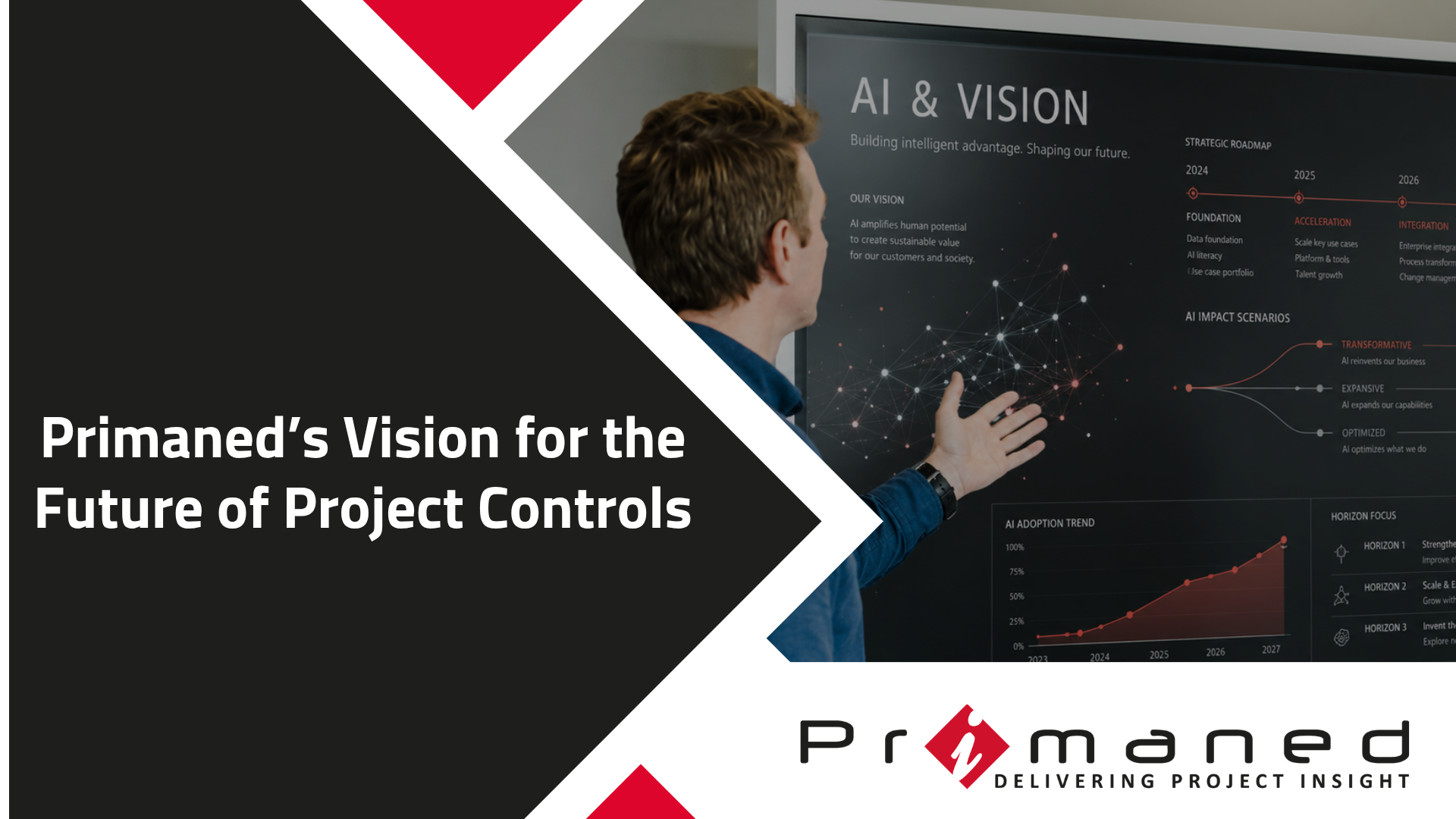
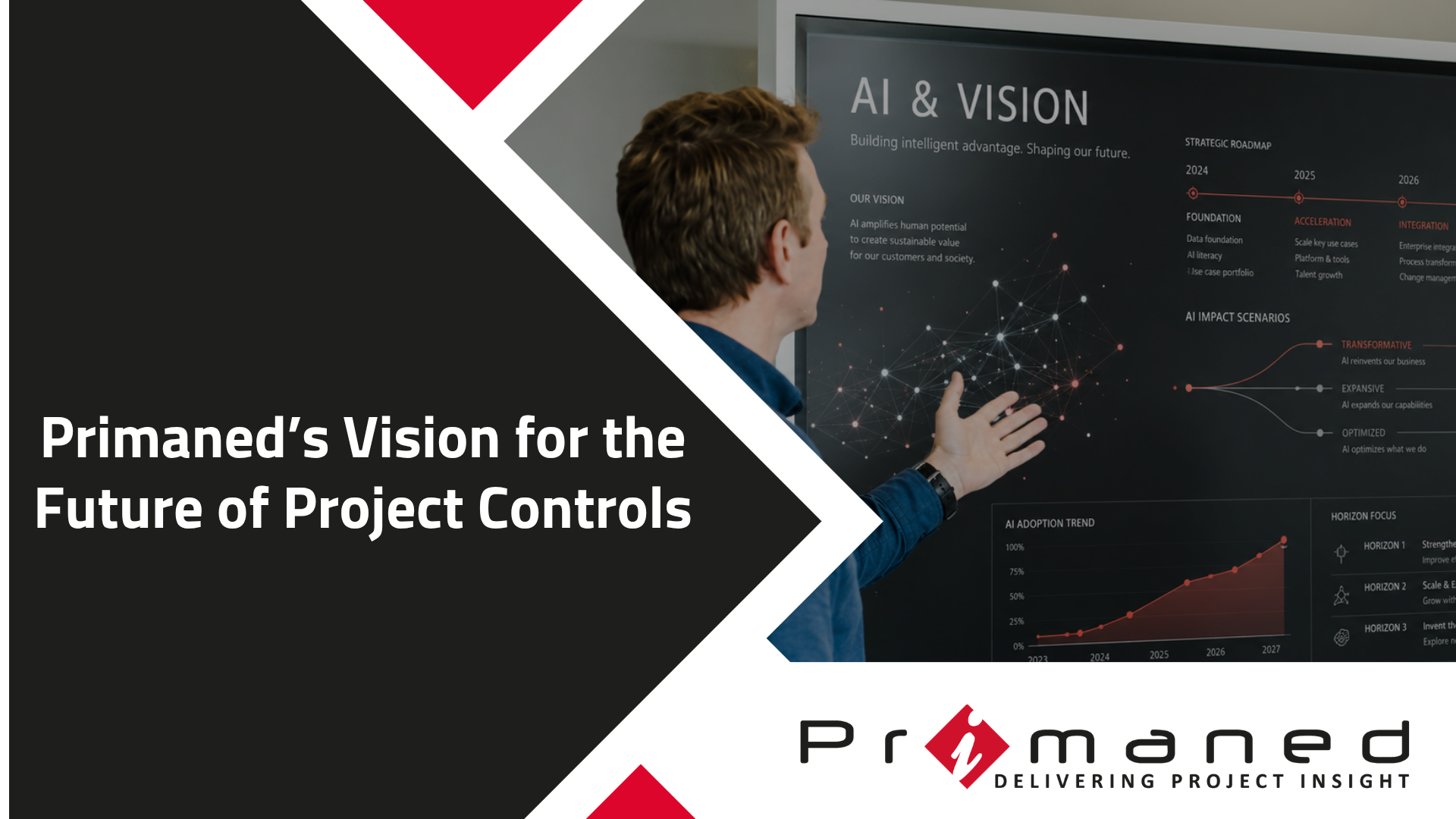
How is AI changing the planner’s role? Discover our vision for the future of Project Controls and why human insight continues to make the difference.

How is AI changing your projects and the planning profession? Discover our vision and see how Michel and Bas apply AI in Project Controls.
Project planning is shifting from drawing up schedules to actively steering projects. AI helps planners and project teams gain insight faster, compare scenarios and make better-informed decisions. This creates more room for the expertise that makes a difference: analysing, advising and collaborating.
AI is not taking over the profession. It is changing the way we work. That makes professional expertise, context and human judgement increasingly important.
%20ENG.png?width=1920&height=1080&name=Primaneds%20Vision%20(AI)%20ENG.png)
How is AI changing the planner’s role? Discover our vision for the future of Project Controls and why human insight continues to make the difference.
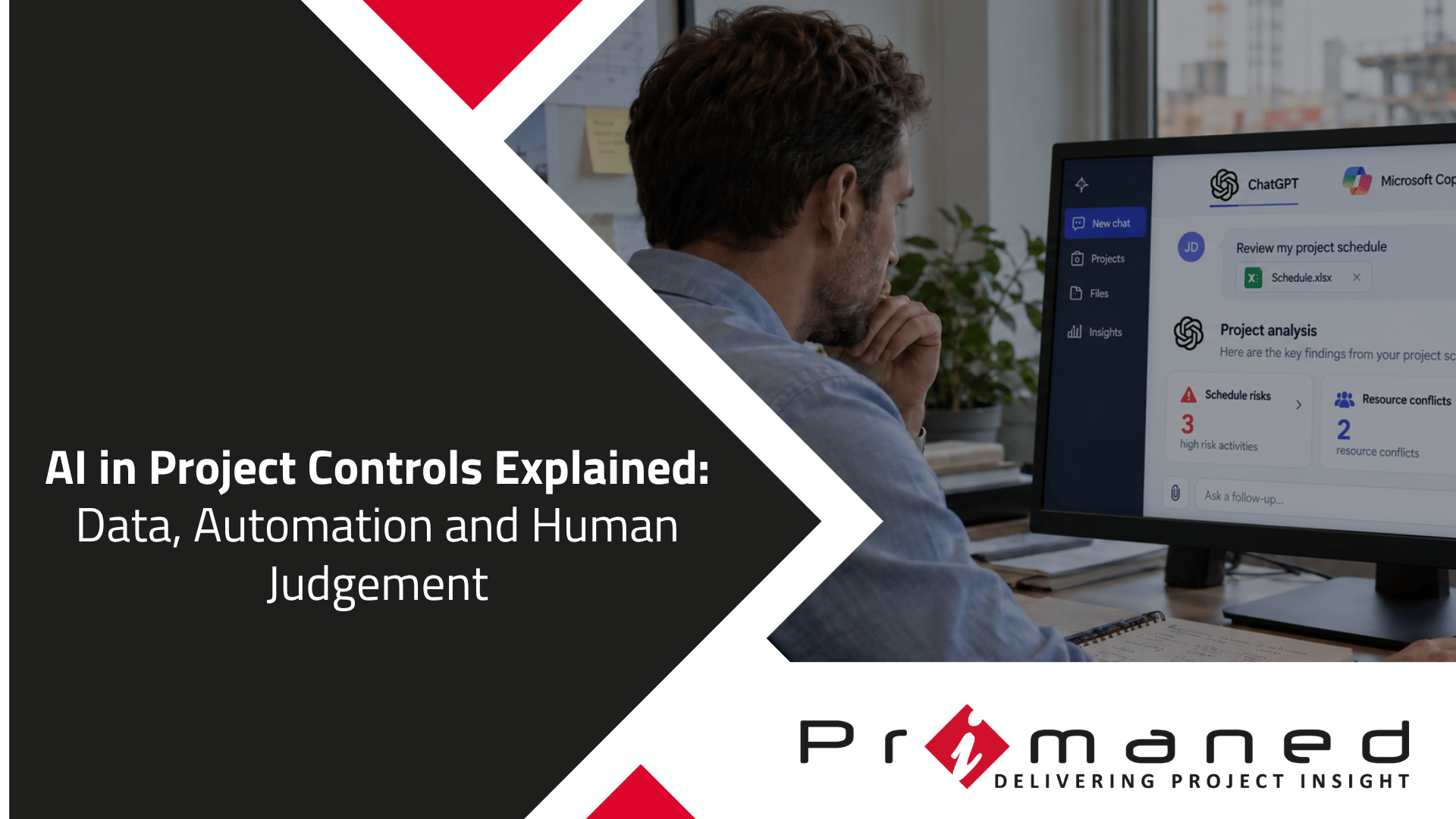
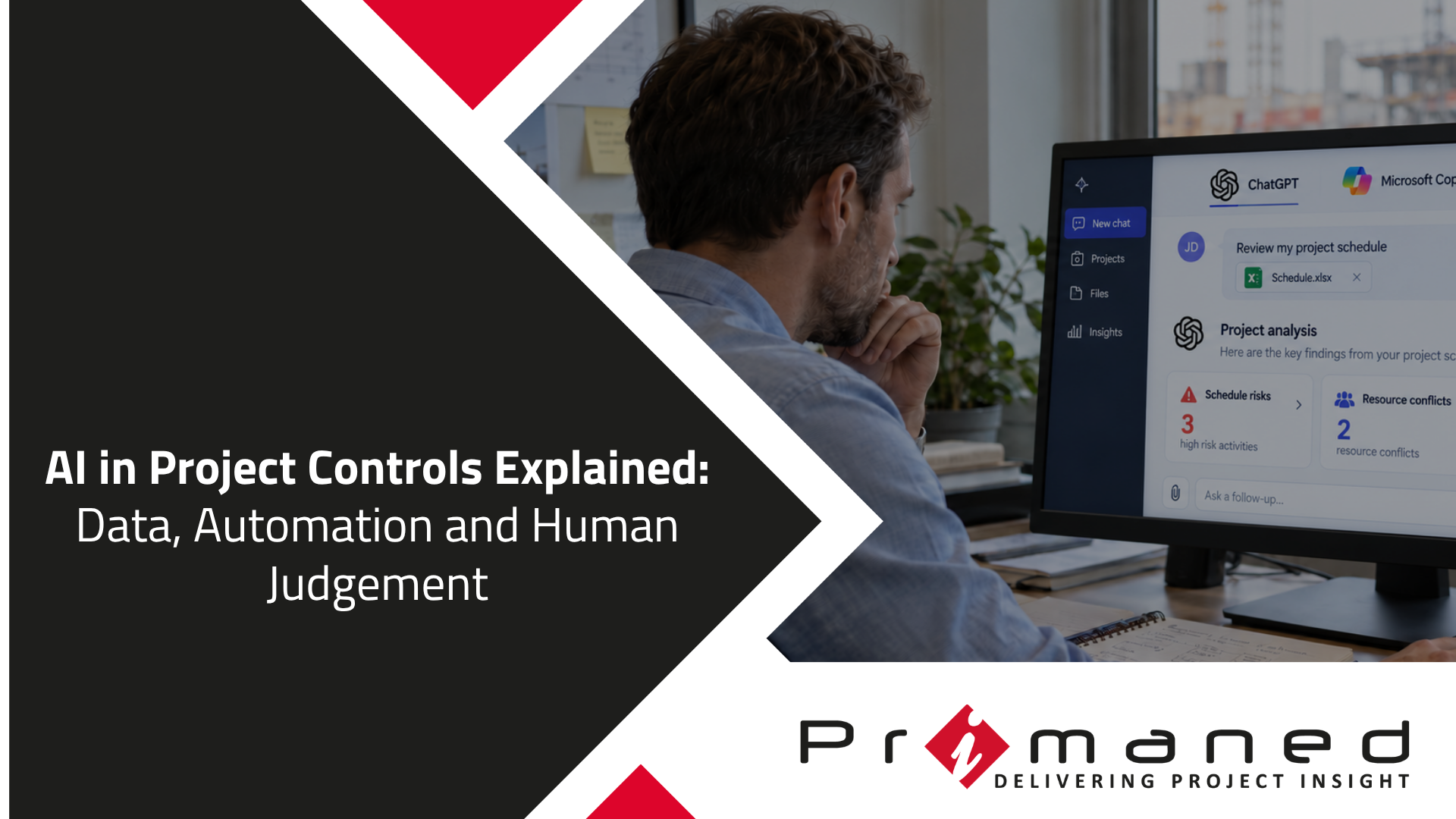
What can language models and predictive AI mean for your project? Explore how automation can help and what it requires from your data. Professional judgement remains central.
Michel Molenaar demonstrates how an AI assistant can work with Oracle Primavera Cloud. A practical exploration of what changes when you can interact with your schedule by asking a focused question.
The role of a language model, AI agents and an MCP connection.
Turn project information into a first draft with activities and dependencies.
Explore scenarios and critically review the proposed schedule.
Bas de Winkel takes you through his working day. Meeting information, schedule analysis and contract details are all familiar tasks where AI can help.
See where AI can help and which judgements remain the planner’s responsibility.
Use recordings, transcripts and action points to find the information you need.
Ask focused questions, explore insights and check the results yourself.
Find relevant clauses and use them when reviewing your schedule.
Talk to Paul and our specialists about the impact of AI, promising applications and a realistic first step. Your project challenge guides the conversation.
Discuss your first stepAn initial conversation about value, requirements and approach, with no obligation.
Discuss your organisation’s challenge with Paul. Depending on your needs, the right specialists can join the conversation, covering planning, Oracle solutions, data and AI.
Clear answers to frequently asked questions about AI and Project Controls.
AI is changing the work of planners. It can process information and prepare analyses. Professionals remain essential for providing project context, checking results, weighing competing interests and making decisions. Bas’s video shows what this collaboration looks like in practice.
Project Controls is shifting from collecting data to interpreting insights. AI is taking on more predictable tasks, giving planners more time for scenario analysis, risk management and strategic advice. Technology and human expertise reinforce each other.
Start with a specific challenge. Look at where processes stall, where time is lost or where better insight could improve decisions. Begin with one practical application, learn from the results and build on them step by step.
Several applications already support planners and project teams today. Examples include turning project meetings into actionable insights, analysing schedule scenarios and accessing project information more quickly using natural language.
That depends on the application. This is why we recommend starting small. An initial use case can often deliver value quickly, allowing organisations to use what they learn to expand their AI applications step by step.
Not always. The quality of the available data, including historical data, matters more than the quantity. Many organisations can already create value by applying AI to existing project information, documents and schedules.
AI supports information analysis and generates insights, but a professional must always assess the results. That is why we believe in a Human in the Loop approach, with AI providing support and the professional making the final decision.
Michel’s video shows a prototype in which an AI assistant works with Oracle Primavera Cloud through an integration. This does not mean the setup is available as standard in every environment. Together, we can assess the data, access rights, integrations and process agreements your application requires.
We start with your challenge. Together, we identify where AI can add the most value, which requirements matter and which first step best suits your organisation. We then support strategy, implementation, adoption and ongoing improvement.
No. Any organisation can benefit from AI when it starts with a specific challenge. Size matters less than the willingness to start small, learn and develop step by step.
How is AI changing your projects and the planning profession? Discover our vision and see how Michel and Bas apply AI in Project Controls.
Process large amounts of project information more quickly and identify discrepancies sooner.
Compare multiple scenarios and gain a faster understanding of their impact on planning and project outcomes.
Automate routine tasks to free up more time for analysis, collaboration, and consulting.
Combine AI with human expertise to make better-informed decisions.
How is AI changing the planner’s role? Discover our vision for the future of Project Controls and why human insight continues to make the difference.
"The question is not whether AI is changing Project Controls. The question is how your organisation responds, what value you want to create and which first step is right for you."

Paul Vogels
CEO, Primaned

Project planning is shifting from drawing up schedules to actively steering projects. AI helps planners and project teams gain insight faster, compare scenarios and make better-informed decisions. This creates more room for the expertise that makes a difference: analysing, advising and collaborating.
AI is not taking over the profession. It is changing the way we work. That makes professional expertise, context and human judgement increasingly important.
What does the rise of AI mean for your projects, your organization, and the role of the planner?
Discover our vision! →

What exactly is AI, and how can you use it today within Project Controls?
Watch the explanation →

What does AI look like in practice, and which tasks can you already perform more efficiently today?
Check out the use cases →
Where do you start if you want to implement AI within your project organization?
Discover the first step →

AI isn't just a thing of the future. There are already concrete applications today that support planners and project teams in their daily work—from processing project information and analyzing scenarios to preparing management reports. The goal is not to replace professionals, but to create more room for analysis, collaboration, and better-informed decisions.
Project meetings provide valuable information, but processing that information often takes a lot of time. AI helps translate meeting minutes, action items, and progress into concrete insights for planning. 𝗕𝗲𝗸𝗶𝗷𝗸 𝗱𝗲 𝘂𝘀𝗲 𝗰𝗮𝘀𝗲 →
What impact does a change have on the schedule? AI helps compare multiple scenarios more quickly and provides insight into the consequences for the schedule, risks, and milestones. This allows for well-founded recommendations to be developed more quickly. 𝗕𝗲𝗸𝗶𝗷𝗸 𝗱𝗲 𝘂𝘀𝗲 𝗰𝗮𝘀𝗲 →
Project information is often scattered across different systems. Ask questions in natural language and get immediate access to the insights you need to make informed decisions and manage projects more effectively. 𝗕𝗲𝗸𝗶𝗷𝗸 𝗱𝗲 𝘂𝘀𝗲 𝗰𝗮𝘀𝗲 →
Michel Molenaar demonstrates how an AI assistant can work with Oracle Primavera Cloud. A practical exploration of what changes when you can interact with your schedule by asking a focused question.
Our strength begins with Project Controls. For over 40 years, we have been helping organizations manage complex projects. Our expertise in planning, risk management, and project management forms the foundation for every AI solution we recommend or implement.
Innovation comes from collaboration. Together with leading technology partners such as Oracle Construction & Engineering, we bring the latest AI-enabled solutions to the field of Project Controls. From implementation to adoption, we help organizations successfully leverage technology.
Implementing AI requires more than just technology. We guide organizations through strategy, implementation, adoption, and change management, ensuring that AI truly adds value to their day-to-day operations.
Things are moving fast. That’s why we continuously invest in knowledge, innovation, and new AI applications. Together with our customers and partners, we’re building the next generation of Project Controls.
Bas de Winkel takes you through his working day. Meeting information, schedule analysis and contract details are all familiar tasks where AI can help.
A successful start with AI doesn’t begin with the technology, but with a specific problem. Identify where processes are stalled, where a lot of manual work is required, or where better insights can lead to better decisions. Start with one use case, one process, or one business unit. Learn from the results and build on them step by step.
Every organization is at a different stage in the development of AI. That’s why we don’t start with a one-size-fits-all solution, but with a thorough discussion. Together, we’ll examine your challenges, determine where AI can add the most value, and take the first step that’s right for your organization.
Stay up to date on the latest developments in our industry, and learn more about upcoming products and events.


%20ENG.png)
No. AI supports planners by automating repetitive and predictable tasks, such as processing project information, analyzing scenarios, and gathering insights. The planner remains responsible for interpretation, evaluation, and decision-making. It is precisely this human expertise that is becoming increasingly important.
Project Controls is shifting from data collection to the interpretation of insights. AI is increasingly taking over predictable tasks, giving planners more time for scenario analysis, risk management, and strategic advice. Technology and human expertise reinforce each other.
Don’t start with the technology; start with a specific problem. Identify where processes are stalled, where a lot of time is being wasted, or where better insights can help you make better decisions. Start with one specific application, learn from the results, and build on that step by step.
There are already several applications available today that support planners and project teams. These include turning project meetings into concrete insights, analyzing planning scenarios, and accessing project information more quickly using natural language.
That depends on the application. That is precisely why we recommend starting small. An initial use case can often deliver value quickly, after which organizations use the experience they’ve gained to expand their AI applications step by step.
Not always. The quality of the available (historical) data is more important than the quantity. Many organizations can already derive value by applying AI to existing project information, documents, and schedules.
AI helps analyze information and generate insights, but the results must always be evaluated by a professional. That is why we believe in a “Human-in-the-Loop” approach, in which AI provides support and the professional makes the final decision.
Yes. Oracle is increasingly integrating AI capabilities into Oracle Primavera Cloud and other Oracle Construction & Engineering solutions. As an implementation partner, Primaned helps organizations successfully apply these innovations within their project environments.
We don’t start with a tool—we start with your challenge. Together, we determine where AI can add the most value, what prerequisites are important, and which first step best suits your organization. We then guide organizations through the entire process—from strategy and implementation to adoption and further optimization.
No. Any organization can benefit from AI, as long as it starts with a specific problem. The size of the organization is less important than its willingness to start small, learn, and develop step by step.